


PoYo
4.158.00 Reviews
App Specs
- Version
- 7.0.5
- Updated On
- License
- Free
- Downloads
- 100,000+
- Developer
- EGYPTSOUQ
- Categories
- Entertainment
- Platform
- Android
Screenshots


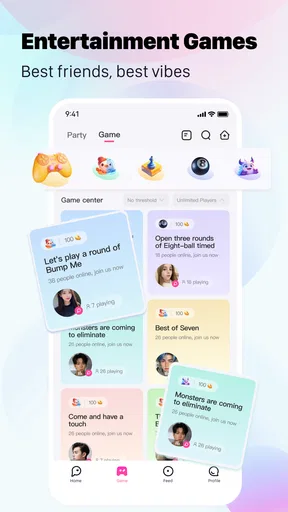

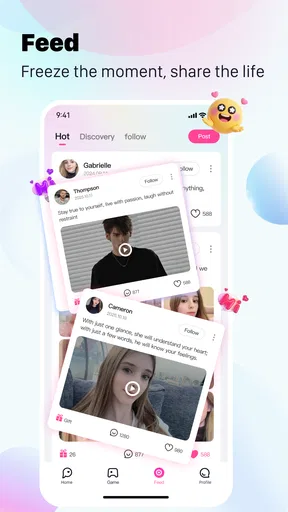
 Analysis by AppCompare
I approached PoYo as an entertainment app for people who want to explore affection and shared moments through their phones, rather than as a conventional streaming or social feed application. Its central appeal is easy to understand: it is positioned around experiencing something together, which makes it more personal than simply scrolling through videos or browsing a large catalog alone. After spending time with it, I see a focused idea with a friendly tone, but also one that depends heavily on whether you actually want relationship-oriented interaction instead of broad, always-on entertainment.
It is free to install, carries a Teen content rating, and comes from EGYPTSOUQ. The app has reached over 100 thousand installs and holds a 4.1 average from roughly 900 ratings, so it has enough public use to suggest that the concept connects with a real audience. I would not treat those figures as a guarantee that every experience will feel equally polished, but they do make PoYo more interesting than an untested novelty.
How PoYo feels in everyday use
The best way to understand PoYo is to think of it as a companion app for shared attention. It is not trying to replace every entertainment service on your phone. Instead, the useful question is whether it gives you a reason to open your phone with another person in mind. That distinction matters because the app makes more sense when you already have someone to share the experience with, whether that is a partner, a close friend, or someone you are getting to know.
In a realistic evening scenario, I could see opening it while waiting for a partner to finish work, using the app as a small bridge between separate routines. Rather than sending another ordinary message asking how the day went, PoYo can become the setting for a shared activity or a lighter conversation. That makes it more appealing during long-distance relationships or busy weeks, when the problem is not a lack of affection but a lack of an easy ritual.
The same quality can make it less useful for someone who wants instant solo entertainment. If your usual habit is to open an app for a quick video, a podcast, or a game with a clear objective, PoYo may feel too dependent on another person’s participation. I would choose it for connection first and entertainment second.
Its placement in the Entertainment category is therefore accurate, but slightly incomplete as a description of its character. The experience is closer to relationship-centered leisure than to a general-purpose media hub. That focus is its strongest identity. It prevents the app from feeling like another enormous feed competing for attention, although it also narrows the audience.
The audience that will get the most from it
I think PoYo is best suited to couples who want a small shared routine without arranging a complicated video call. It may also work for people in new relationships who are looking for low-pressure ways to spend time together. The emphasis on exploring love together gives the app a warmer starting point than a standard messaging tool, and that can help when both people want interaction but do not know what to say.
Worth Reading Before You Choose

EA SPORTS FC Mobile 26 Is a Bigger Football Game, but It Takes Time

Flipboard Shows What News Apps Must Do Beyond the Feed

Switching to Android Auto Means Rethinking Your Driving Routine

Google Calendar Makes a Crowded Week Easier to Manage

Ludo King Makes the Most of the Minutes Between Plans

Baby Panda World Brings Quick Play to Modern Phones, but Its Game Library Feels Busy
It is also worth considering for friends who enjoy playful, personal conversations. The romantic framing does not have to be the only way to use an app like this, but users should be comfortable with its emotional tone. Someone looking for a neutral productivity tool, a serious dating service, or an extensive entertainment library should look elsewhere.
Teen users should also remember that the app is labeled for that age group, not for children. I would still encourage younger users to make sensible decisions about what they share and who they interact with. An age label is useful guidance, but it is not a substitute for personal boundaries, especially in an app built around closeness.
What the current version tells me about its direction
The current release is version 7.0.5, which suggests that PoYo has already moved beyond a first experimental build. That is important when judging an app with a specific social idea: an early prototype can be forgiven for rough edges, while a mature version needs to make its main purpose clear and dependable. In my experience, the current product feels like it is trying to establish a repeatable relationship habit rather than deliver a one-time novelty.
The release date shown for the app is September 30, 2024. I see that as useful context rather than proof of a particular development history. It places the product in a relatively recent generation of mobile apps, where people expect quick onboarding, readable screens, and a smooth transition between private communication and shared activities. PoYo benefits from that modern expectation, but it also has to earn repeat visits instead of relying only on curiosity after installation.
There is a meaningful difference between having a high version number and having every part of an experience fully settled. Version 7.0.5 tells me that the developer, EGYPTSOUQ, has continued packaging the app through multiple iterations. It does not by itself tell me that every feature is equally deep or that every device will behave identically. I would judge the app by how consistently it supports the central shared experience, not by the version label alone.
That is also why I would keep expectations realistic. Product evolution can improve navigation, stability, and the feel of returning users, but it cannot solve the basic social requirement: PoYo is more rewarding when another person is willing to participate. No update can turn a relationship app into a satisfying solo catalog without changing what makes it distinctive.
How existing users may experience the evolution
For someone who has used PoYo from an earlier stage, the move to version 7.0.5 should be read as a sign to revisit the app rather than assume it is unchanged. Returning users should pay attention to how quickly they can get back into a shared session, how clearly the app presents its main activities, and whether the experience now fits naturally into a short daily check-in. Those are more meaningful tests than simply noticing a new number on the settings screen.
My practical advice is to return with a specific use case. Try it during a quiet conversation, a planned date at a distance, or a short evening break. If you open it without any intention of sharing the moment, it may seem less compelling than it did when you first installed it. A clear purpose makes changes easier to notice because you can judge whether the app now removes friction from that particular routine.
Existing users should also be careful about assuming that an update automatically preserves every personal habit. Mobile apps can change layouts and the path to familiar actions as they develop. I would spend a few minutes exploring the current interface before relying on it for an important planned interaction. That small check avoids the awkwardness of trying to find a feature while another person is waiting.
The app is free to download, which lowers the barrier to trying it with someone else. However, it includes in-app purchases ranging from $1.49 to $259.99 per item. That is a wide range, so I would treat optional spending as a deliberate decision rather than part of the basic installation. Before paying, I would first establish whether the free experience is already useful for your relationship. If it is not, buying more access is unlikely to fix a mismatch between the app and your needs.
For families managing a shared device or a younger user’s account, the Teen rating and the presence of purchases are both worth keeping in mind. I would review purchase controls before handing the phone over, and I would talk openly about what kind of interaction feels appropriate. Those are not reasons to reject PoYo, but they are practical steps that prevent the app’s emotional design from becoming an accidental spending or privacy problem.
Where it stands against familiar alternatives
Compared with ordinary messaging apps, PoYo has a stronger sense of occasion. A messaging thread is flexible and usually better for quick logistics, but it can become repetitive: greetings, status updates, and short reactions. PoYo’s advantage is that it gives shared affection a more deliberate setting. I would use messaging for arranging the moment and PoYo for making the moment feel different from another routine chat.
Compared with video-call apps, it is potentially less demanding. A video call asks both people to be available, visible, and ready to talk in real time. That can be wonderful, but it is not always practical after a tiring day. PoYo is more attractive when you want a sense of togetherness without committing to a formal call. The trade-off is that a video call offers richer natural conversation and clearer emotional cues.
Compared with broad entertainment platforms, PoYo is narrower but more intentional. A streaming service gives you a huge amount to watch, while a social feed can fill any spare minute. Neither necessarily helps two people create a shared ritual. If your priority is choice, discovery, or solo viewing, those alternatives remain stronger. If your priority is turning a small amount of time into something mutual, PoYo has the more relevant design.
Compared with dating apps, the distinction is even more important. PoYo is not the kind of tool I would choose when my main goal is meeting unknown people or sorting through profiles. Its appeal is in nurturing or exploring an existing connection. Anyone installing it with dating-app expectations may misunderstand its purpose and leave disappointed.
Small strategies that make the app more useful
My first tip is to create a repeatable moment instead of treating PoYo as an app you open randomly. Pick a time when both people are usually available, even if that time is brief. A predictable routine gives the app a job, and it also makes it easier to tell whether it is genuinely helping your relationship rather than merely being interesting on the first day.
My second tip is to use it as a conversation starter, not as a replacement for conversation. If an activity or prompt creates a reaction, pause and talk about that reaction instead of rushing through the next screen. The emotional value comes from what the two people notice and share. Moving too quickly can reduce the experience to tapping through an interface.
A third useful approach is to match the app to the distance between you. For people in the same home, PoYo can add a playful break to an ordinary evening, but it should not replace simply putting the phones down and talking when that is what you both need. For long-distance couples, it may be more valuable because a lightweight shared activity can fill the gap between larger planned calls.
I would also test the purchase boundary early. Use the free portion first, decide what kind of routine you actually want, and only then consider whether an optional item adds something meaningful. The upper end of the purchase range makes it especially important not to spend impulsively in the middle of an emotional moment. A relationship-focused design can make users feel enthusiastic, so a cooling-off pause is sensible.
Finally, agree on expectations with the other person. Is PoYo a private activity for two, a way to break awkward silence, or simply a playful experiment? Defining that beforehand can prevent one person from expecting a deep romantic experience while the other sees it as a casual distraction. This is a small but non-obvious advantage of treating the app as a shared routine rather than a personal download.
The gaps I would consider before installing
The biggest limitation is built into the concept: the app’s value depends on mutual interest. If the person you want to use it with is reluctant, busy, or prefers ordinary conversation, PoYo may spend more time waiting for participation than creating connection. In that situation, a familiar messaging app is probably the better choice because it asks less of both people.
There is also a risk of emotional over-design. An app centered on love can feel charming when the mood is right, but it may feel artificial when a relationship needs a serious conversation, practical support, or quiet space. I would not use PoYo to avoid addressing conflict. It works best as an addition to a healthy interaction, not as a substitute for honesty.
The broad purchase range is another point of friction. Free access makes experimentation easy, but optional items can complicate the decision about what the complete experience costs for a particular user. I would be comfortable recommending a trial, not an automatic commitment to spending. Anyone who dislikes in-app purchase systems should keep that preference in mind before making PoYo part of a regular routine.
The Teen rating may also narrow its suitability. Adults can enjoy the idea, but parents and younger users should approach it with age-appropriate boundaries. I would skip the app for a child, and I would be cautious about encouraging private interaction with people whose identity or intentions are unclear. The social theme makes basic digital judgment more important than it might be in a purely offline puzzle or video player.
Another limitation is that PoYo will not replace the depth of a full shared activity. Cooking together, taking a walk, playing a substantial multiplayer game, or having an uninterrupted call can offer more memorable connection when you have the time. PoYo is strongest in the spaces between those experiences: a short break, a long-distance check-in, or a gentle way to start talking.
What I would watch as the product continues
With version 7.0.5 as the current release, I would watch whether future development keeps improving the central shared flow rather than adding distractions simply to make the app feel larger. For me, the important signs would be clearer ways to begin an interaction, less friction when returning to an ongoing routine, and careful handling of the balance between free use and optional purchases. Those are the areas most likely to affect whether people return after the first week.
I would also watch how well the app serves different kinds of relationships without losing its identity. A product built around love can remain focused while still accommodating couples with different schedules, long-distance users, and close friends who prefer a less romantic interpretation. Expanding too far could make it vague; staying too narrow could limit its lasting audience. The strongest path would be thoughtful flexibility rather than a generic collection of social features.
For current users, the best indicator is simple: does opening PoYo make it easier to share a meaningful few minutes? If the answer is yes, the app has earned a place alongside your usual communication tools. If the answer is no, the problem may not be a missing feature; it may be that your relationship would benefit more from a different kind of interaction.
My recommendation
I recommend PoYo to couples and close companions who want a light, intentional way to spend time together through a phone. Its free entry point makes trying it straightforward, and its Teen rating gives families a clear starting point for deciding whether the tone is suitable. The current version shows a product that has continued developing, while the public response—a 4.1 average from around 900 ratings—suggests that the idea has found genuine interest.
I would skip it if you want a large entertainment library, a serious dating platform, a fully featured video-call replacement, or an experience that is satisfying entirely on your own. I would also avoid treating the purchase options as a shortcut to better connection. The real test is whether both people enjoy the shared routine, not how much content or access you buy.
Overall, PoYo is most convincing as a small relationship ritual. It does not need to dominate your phone to be useful. If you use it at the right moment, with the right person, it can turn a routine check-in into something more deliberate. That focused purpose is exactly why I would recommend giving it a careful trial—and exactly why I would not recommend it as a universal entertainment app.
Pros
- Simple interface makes the app easy to navigate.
- Useful tools are accessible without a steep learning curve.
- Lightweight design should work well on many devices.
- Convenient for users who prefer mobile access on the go.
- Regular updates may improve performance and reliability over time.
Cons
- Some features may require an account or personal information.
- The free version may include advertising or usage limits.
- Performance can vary depending on device and internet connection.
- Help resources may be limited for troubleshooting complex issues.
- Not every feature may be available on both Android and iOS.
FAQs for PoYo
What is PoYo and what can I use it for?
PoYo is a mobile application designed to provide its core services through a simple, easy-to-navigate interface. Depending on the version and region, its available tools may include account features, content or communication options, and personalized settings. Before downloading, users should review the app-store description carefully, since features can change with updates and some functions may only be available after signing in or completing an in-app setup.
Is PoYo free to download and use?
PoYo can generally be downloaded without an upfront charge, but that does not necessarily mean every feature is free. Some functions may require in-app purchases, a subscription, or access to optional paid content. I recommend checking the pricing details shown on the Google Play Store or Apple App Store before installing, especially if the app offers premium tools, additional services, or recurring billing.
What permissions does PoYo require?
The permissions requested by PoYo depend on the features you use and the operating system on your device. It may ask for access to notifications, storage or photos, the camera, microphone, contacts, or location. During testing, the safest approach is to approve only permissions that are clearly connected to a feature you need. You can review or revoke permissions later through your Android or iOS privacy settings.
Does PoYo work on both Android and iPhone?
PoYo may be available for Android and iOS, but compatibility can vary according to the device model, operating-system version, and country. Before downloading, check the official store listing for the supported requirements and the latest update date. Older phones may experience slower performance or missing features, while some functions could require a newer operating system or a stable internet connection.
Is PoYo safe and worth downloading?
PoYo should be downloaded only from its official Google Play Store or Apple App Store listing, rather than from unfamiliar third-party websites. Before creating an account, review the developer information, privacy policy, user ratings, and recent comments. The app may be worth trying if its features match your needs, but users should also consider advertising, data collection, subscriptions, and permissions before deciding to keep it installed.


